Charles Dinda, a holder of Bachelor of Laws, works for the Danish Institute for Human Rights in Zambia as Senior Legal Advisor. He also served as the national expert on access to justice under a project called Community Justice Project (CJP). Under his current position, he provides technical assistance to the Programme for Legal Empowerment and Enhanced Justice Delivery (PLEED) in Zambia supported by the European Union and the Federal Republic of Germany, with technical assistance from the Deutsche Gesellschaft für Internationale Zusammenarbeit (GIZ) and DIHR. Besides this, he has a long history and expertise of working with traditional justice institutions, civil society organizations both at community grassroots and national levels in Zambia. Mr. Dinda holds various qualifications in justice delivery, legal aid and human rights. He has long years of practical experience in paralegalism, human rights advocacy skills and training on HIV and AIDS in Sub Saharan Africa. He is also a national trainer for Local Court Magistrates, a training programme carried out in collaboration with the Directorate of Local Courts at the High Court of Zambia. Mr. Dinda has more than 20 years of unique practical experience working in the field of law, combining criminal, civil and customary justice systems in Zambia, which has contributed greatly in the development and training of state institutions, traditional leaders and their customary justice institutions, at all levels, from communities, districts to the provincial and central levels.
LOCAL RESEARCHERS - ZAMBIA
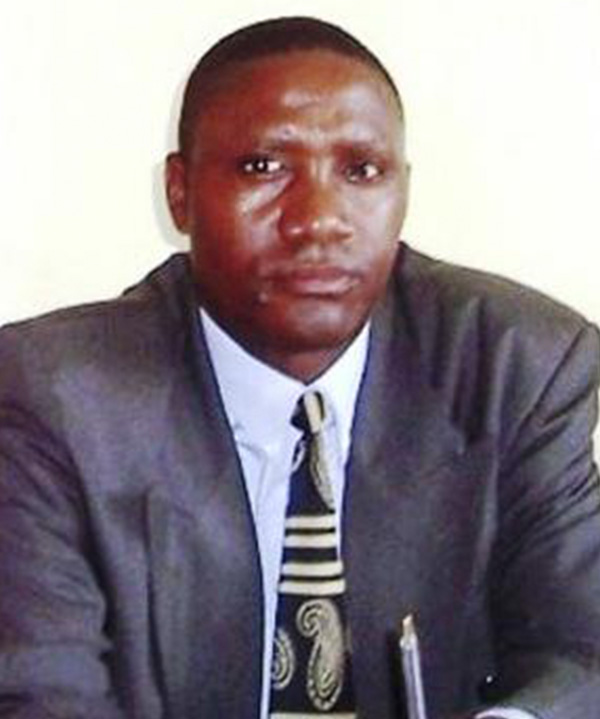

Karol Limondin is Senior Legal Adviser at the Danish Institute for Human Rights (DIHR), currently posted in Lusaka, Zambia, providing expertise and support to the implementation of the Programme for Legal Empowerment and Enhanced Justice Delivery (PLEED) in Zambia supported by the European Union and the Federal Republic of Germany, with technical assistance from the Deutsche Gesellschaft für Internationale Zusammenarbeit (GIZ) and DIHR. Mr. Limondin has specialised in legal aid and paralegalism since he joined DIHR in 2008 with a focus on the development of legal aid policy and implementation framework in Rwanda, Kenya, Tanzania, Uganda and Zambia. Mr. Limondin’s work in that regard has ranged from legal aid and paralegals baselines, capacity development for paralegals and legal aid CSOs, development of training curriculum and materials for paralegals, conceptualisation and implementation of innovative legal aid service delivery models, to advocacy and drafting of legal aid policies and regulatory frameworks. In addition, Mr. Limondin has worked extensively since 2005 with a wide range of state institutions in Rwanda and Zambia to develop their justice delivery capacity based on human rights. This includes the judiciary (all court levels), the national prosecution service, the national police as well as informal justice systems and traditional leaders at community level. Mr. Limondin’s current involvement under the PLEED in Zambia covers, inter alia: (i) The development and implementation of a policy, legislative and regulatory framework on legal aid. On 1 October 2018, the Government of Zambia adopted a National Legal Aid Policy with the objective to ensure efficient and effective delivery of legal aid services to the poor and vulnerable people in Zambia. The process of amending the legislation on legal aid is underway. (ii) The development and operationalisation of a three-level paralegal training scheme. On 8 July 2018, the Technical Education, Vocational and Entrepreneurship Training Authority Zambia approved the newly established training scheme for paralegals in Zambia. Training courses are currently taking place at all three levels, for a total of 270 paralegals. (iii) The establishment and operation of 15 legal desks at court, correctional facility and police station levels based on a cooperation between the Legal Aid Board in Zambia and CSOs. In 2018, the 15 desks provided legal aid to almost 11,000 persons. Women and juveniles constitute 30 percent of the clients.